Around the middle of October, something changes in how you look at your calendar: the jobs you've got will carry you into November, but December is thinner, and January? You genuinely don't know. And the part nobody says out loud is that you've got three or four people counting on you who have no idea you're doing this math at a red light.
Every contractor in a seasonal market runs this loop. Most run it alone, in their head, starting a little later each year than they'd like.

Why’s the slow season a cash problem first?
Most contractors think of winter as a stretch with no work. That's usually not what hurts.
The timing gap: Your fall jobs wrap up in November and December. The money for them can land weeks later, and some of it lands in January.
The fixed costs: Insurance, truck payments, your phone, your software, and any crew you're carrying keep running at the same rate they did in July.
The real low point: It isn't the week with no work. It's the stretch where the work has stopped and the last of the money hasn't landed yet.
51 days
The average wait for a subcontractor to be paid after submitting a pay application, according to Billd's 2026 National Subcontractor Market Report.
That survey covers commercial subs, and residential billing works differently. The pattern is the same, though: the work ends well before the cash does.
What's your real winter number?
Most contractors have a feeling about their winter number. Very few have the actual number. You need two figures.
- One month with no revenue: What it costs to keep the doors open. Insurance, vehicle payments, software, phone, any salaried help, and what you personally need to take home.
- How many of those months you're planning for: Not a guess about the market. Your own local pattern from the last two or three winters.
Multiply them. That's your target. It's usually smaller than the dread suggests, and the specific version is a lot easier to carry than the vague one. Your accountant can help you get it right the first time. After that, it's the same math every year.
What should you do in September and October?
By the time it's slow, most of your options are gone. The ones that matter happen while you're still busy, which is why nobody wants to think about it.
Bill each phase as it wraps: Billing your October and November jobs by phase means more of that money lands before the gap instead of during it. If your only invoice is the final one, you've scheduled your own crunch. Milestone Invoicing lets you set the payment schedule upfront and collect at each phase, with photos or PDFs attached so clients can see the progress. Your AI Teammate remembers how you structure payments, so milestones on similar jobs come pre-filled. It's included on every plan.

See what's billable now: AI Budget Tracking turns an approved estimate into a live budget, so you can see what you've spent, what you've invoiced, and where each job stands without waiting for it to close. It's available on Pro and Scale.
Collect what you're carrying: Every contractor has two or three invoices sitting out that haven't been chased because things were busy. Clean those up in October, not in January when you need them.
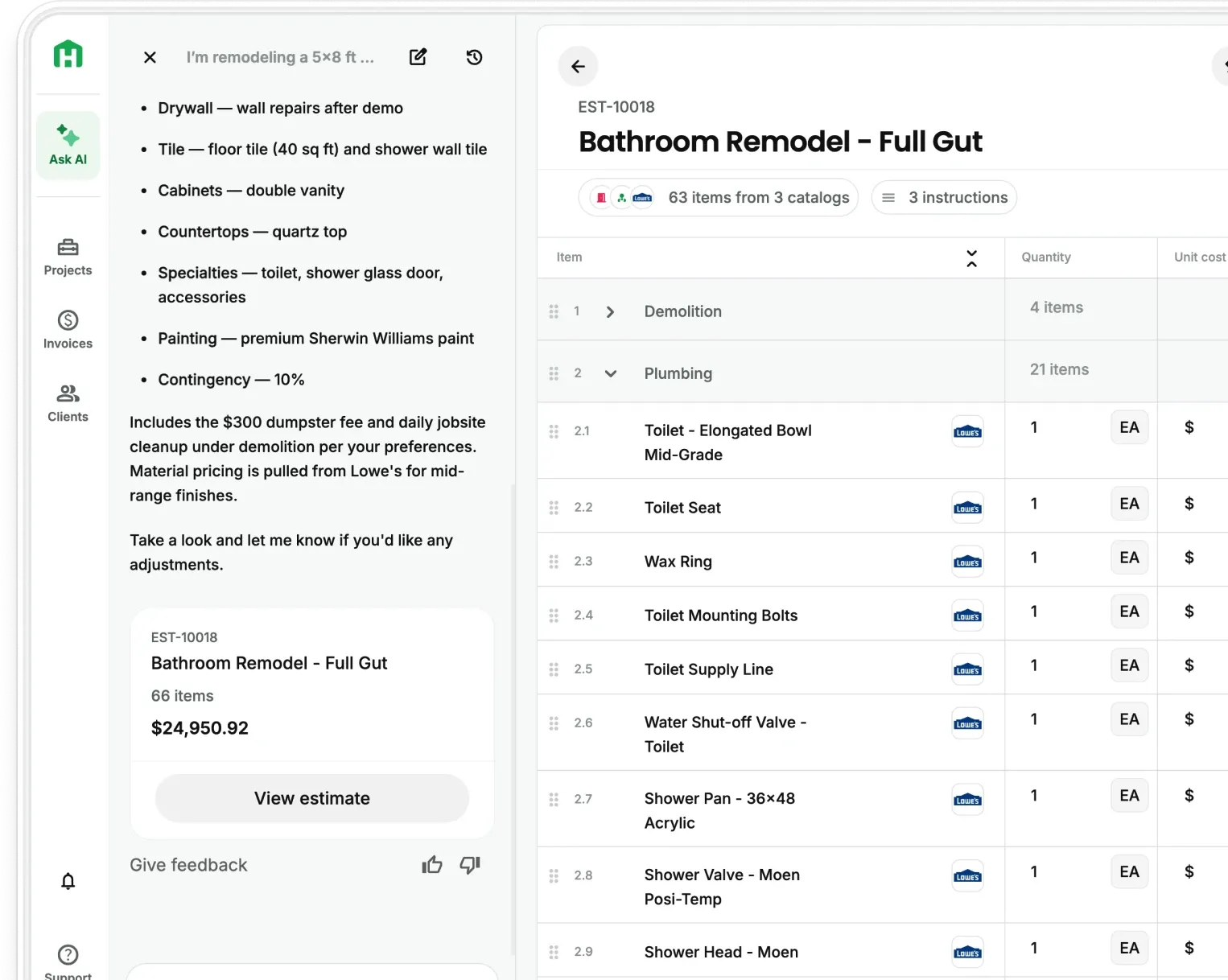
Keep bidding through the fall: The instinct when you're slammed is to stop looking for work, and then the pipeline is empty right when you need it full. A same-day estimate keeps it moving. Instant AI Estimates builds the estimate from your scope, photos, or a voice note, and it's included on every plan.
Book the winter-friendly work now: Interior jobs like basements, bathrooms, and kitchens. Homeowners are more flexible on timing in October than they are in January, and a job on the books for February changes how December feels.
How do you talk to your crew about it?
This is what costs you good people.
The instinct is to protect the crew from the worry, so you say nothing until you know. From their side, silence reads like a bad sign, right when everyone in the trades starts wondering. Your best carpenter won't ask you. He'll take a call from someone who did ask him.
You don't have to promise anything. Being straightforward covers it:
- What the schedule looks like through the winter
- What you're doing about it
- When you'll know more
- What you'd tell them if something changed
A crew that knows where it stands will stick with you through a thin January. A crew that's been guessing since Halloween won't.
What's should you be doing in the slow stretch?
There's a version of the slow season that's genuinely useful, but it doesn't happen by accident. The things you never have time for in July are all winter work.
- Rebuild your pricing: Use what you actually spent this year, not last year's numbers. Clean up your estimate templates and material rates while you're at it.
- Call your past clients: Every client from the last two years is the cheapest lead source you have. Handoff's CRM keeps each client's estimates, invoices, and project status in one record, so the call starts with the full history. It's included on every plan.
- Photograph your finished jobs: Do it properly, before you forget which ones came out best.
- Fix the one thing that annoyed you all summer: Pick one part of your process and sort it out while you've got the time.
It may sound like busywork, but the contractors who come out of winter with better pricing and a full pipeline did that work in January, while the ones who came out flat spent January refreshing their phone.
Why’s the dread worse than the season?
Most of the weight of a slow winter gets carried in September and October, in the version of it you imagine while you're doing something else. The actual January is usually more manageable than the one you pictured. The contractors who suffer least are the ones who ran the numbers early enough that the fear had something specific to attach to.
You've been through this before, and you'll get through it again. The goal is to spend less of the fall carrying it alone.
Want to know what's billable before the season turns? Start your free 7-day trial, no credit card required, and see where your open jobs and invoices stand.
Other FAQs about managing the slow season
When should a contractor start planning for the slow season?
Late summer or early fall, while you've still got jobs to bill and bids to place. By the time work thins out, most of the options that matter are gone.
How much should a contractor set aside for winter?
It depends on your local pattern. Use your last two or three winters to pick the number of months, multiply by what it costs to keep the doors open each month, and ask your accountant to check the math.
What kind of jobs fill the calendar in the slow season?
Interior work like basements, bathrooms, and kitchens. Homeowners tend to be more flexible on timing in the fall, so booking them in October puts February work on your schedule.