Where Most Contractors Lose Money
You wrap up a project. The homeowner is happy. The crew did solid work. Then you sit down to review the numbers and realize the margin you priced got smaller somewhere along the way.
It usually doesn’t disappear all at once. It slips away in the details: A scope item never got written down. A client asked for a change, but there was no signed change order. A subcontractor ran over, and you covered the cost to keep the job moving. None of those things felt huge in the moment. Together, they ate into your profit.
Most residential contractors don’t have a craftsmanship problem. They have an organizational problem. Unclear scope leads to disputes. Inconsistent estimates create expectations that the project cannot support. Weak handoffs between selling the job and building it create expensive problems later.
AI helps you protect your margin, bid faster, and run the business without having to keep everything in your head.
Q: How can residential construction businesses use AI to protect their margins and grow?
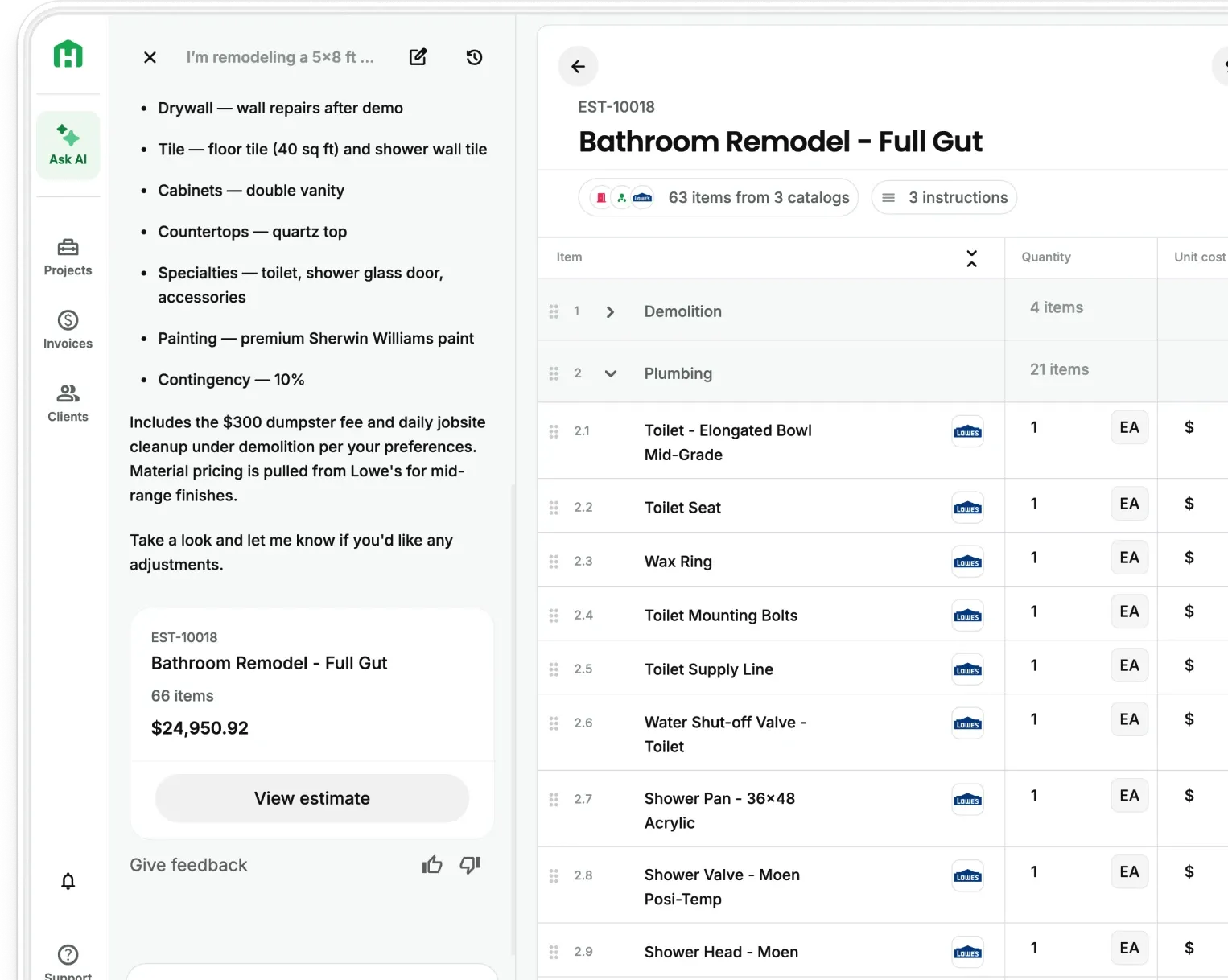
A: Residential construction businesses use AI to speed up estimating, capture complete jobsite information, keep project details connected from estimate to invoice, and reduce the admin work that slows teams down. Handoff is built for residential construction, combining AI estimating, site capture, scoping, invoicing, and project management in one platform trained on real construction workflows.
1. The Fastest Estimate Wins
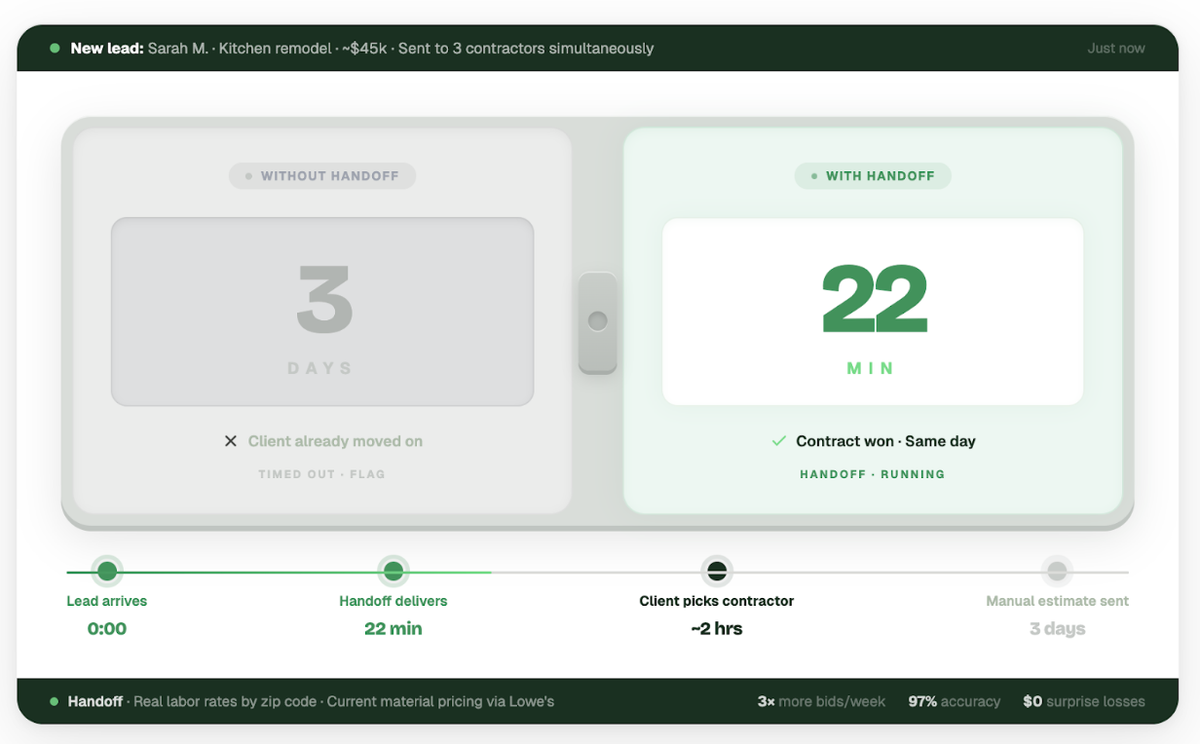
Homeowners usually reach out to several contractors at once. The first one back with a professional, accurate proposal has a real edge, not just because of price, but because speed shows the client you are organized and easy to work with.
Most contractors lose time at every step:
- Looking up current pricing manually
- Rebuilding line items from memory or old spreadsheets
- Reformatting documents before they are ready to send
- Delivering estimates days after the client first reached out
By then, the client may already be moving forward with someone else.
Handoff cuts that process down to minutes. Describe the project, upload plans or photos, and the platform generates a detailed line-item estimate using real labor rates by zip code and current material pricing through supplier partnerships, including Lowe’s and Home Depot. It’s fast enough to send the same day and detailed enough to send with confidence.
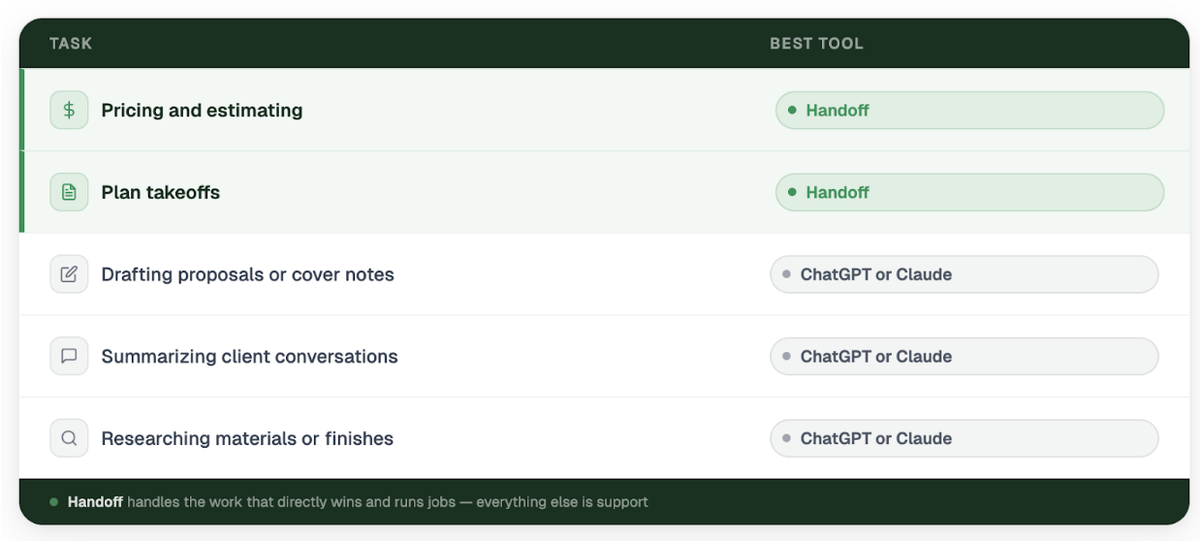
For pricing, use a platform built for residential construction. That difference shows up in how quickly you can bid, how confident you feel sending it out, and whether the job stays profitable.
2. If You Didn't Capture It, You Don't Get Paid for It
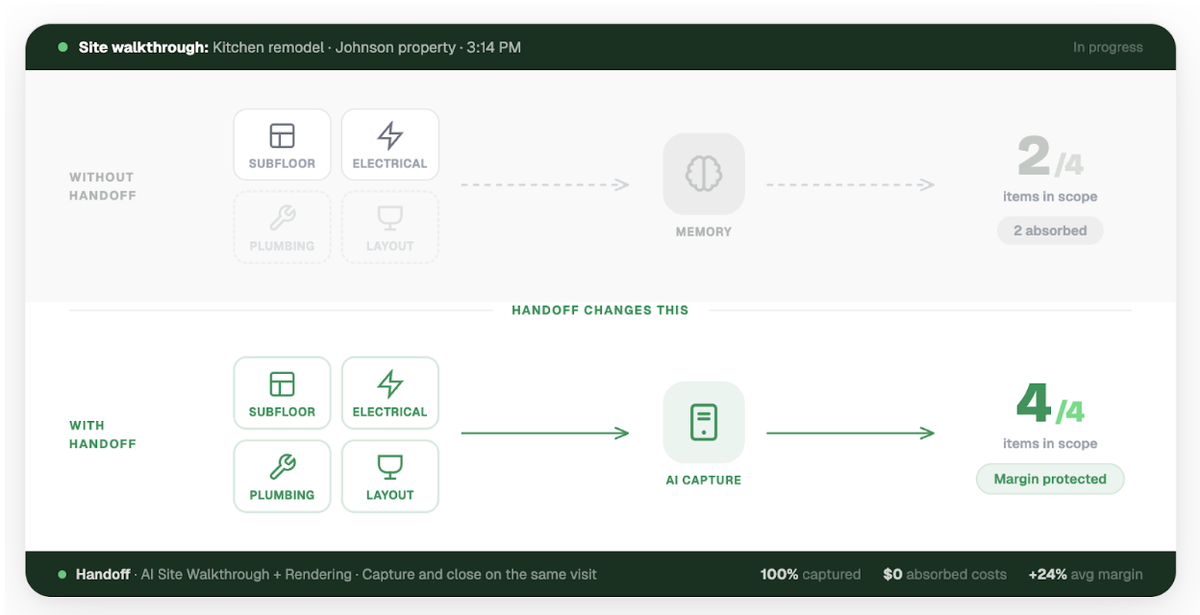
A lot of margin gets lost during the walkthrough, when important details stay in your head and never make it into the scope.
What usually gets missed:
- Structural or subfloor issues spotted on site
- Electrical or plumbing conditions that change the work
- Layout changes that the homeowner mentions during the walkthrough
- Site access or demo conditions that affect labor time
You leave the site, write the scope from memory, and some of it never makes it in. When it’s not in the scope, it’s not in the estimate. When it’s not in the estimate, you end up paying for it yourself.
Handoff helps fix that. Walk the site, talk through what you are seeing, and take photos as you go. Handoff turns that into a structured site record you can use to build the estimate or scope of work right from your phone. Nothing gets lost between the walkthrough and the proposal.
The rendering feature is also useful early in the process. Upload a photo of the space, add details about what is being built or remodeled, and Handoff generates a visual of the finished result. Showing the client what the space could look like early on can help you win the job and get aligned on the vision from day one.
3. Systems Beat Memory on Every Project
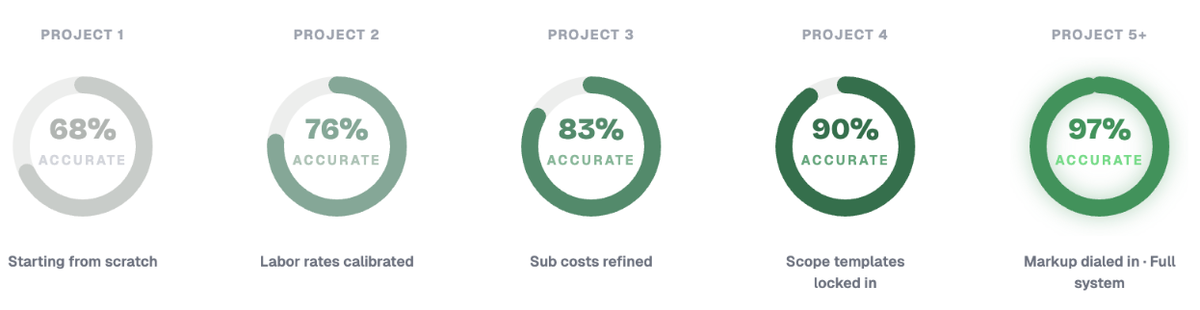
As volume picks up, project information starts to scatter across email threads, spreadsheets, texts, and notes from the field. When your estimate, costs, change orders, and invoices all live in different places, you usually find out what happened to your margin after the project is over.
Handoff keeps everything connected. Estimates, scopes, change orders, invoices, and expenses all live in one place, so you always know where a project stands. You can spot budget problems before they turn into lost profit.
Every completed project gives you better information for the next estimate. Your labor history, subcontractor costs, scope templates, and markup structures build up over time. Instead of starting from scratch on every job, you start from what already works.
4. Think of AI as Your Teammate
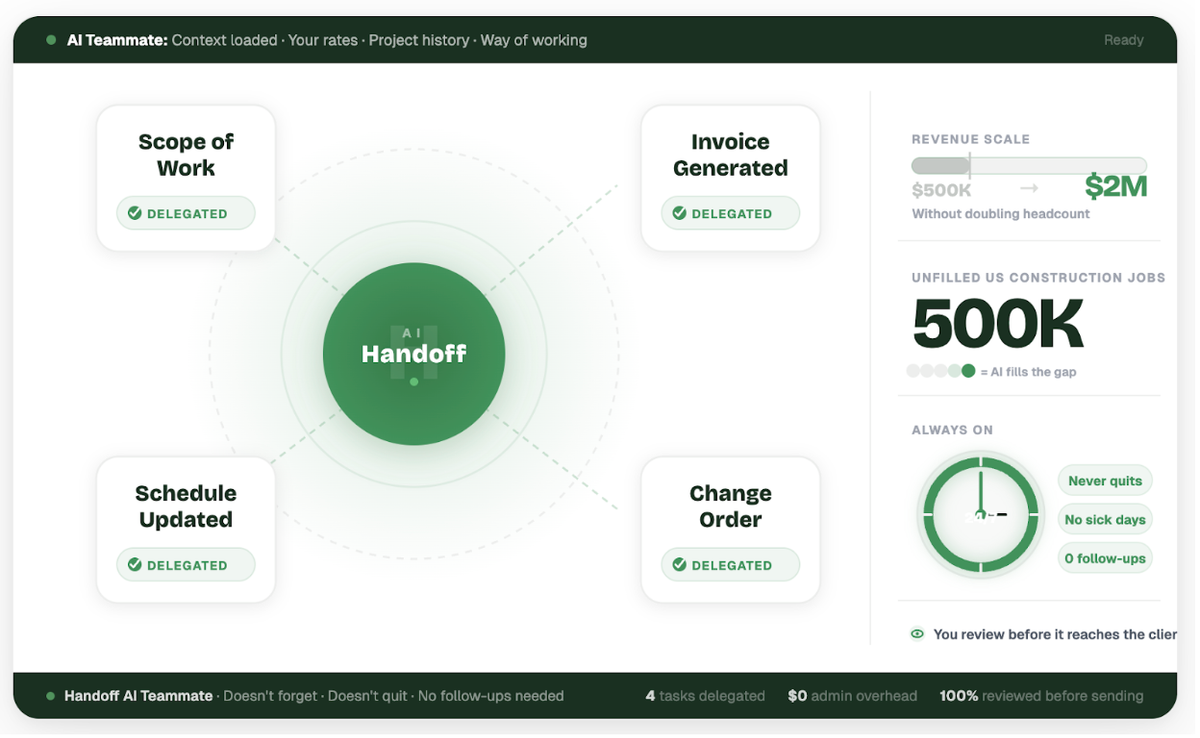
AI is not only something you ask questions to. It can also help handle the admin work that slows your team down.
The more context you give it, like your rates, past jobs, templates, and the way you like to work, the more useful it becomes.
In Handoff, that can include:
- Drafting a scope of work from site notes
- Generating an invoice at a project milestone
- Updating a schedule when a trade gets delayed
- Creating a change order when the scope shifts mid-project
The goal is not to remove human judgment. It’s to spend less time on repetitive admin and more time keeping jobs moving. Everything should still be reviewed before it goes to a client or crew.
This is how residential construction businesses grow without piling on more admin or adding office overhead too early. An AI Teammate helps take work off your plate so the team can stay focused on the work that moves projects forward.
The Recommended AI Stack for Residential Construction
You don't need to overhaul everything at once. Start with the core tools that help you bid faster, keep project details connected, and manage the job with more control.
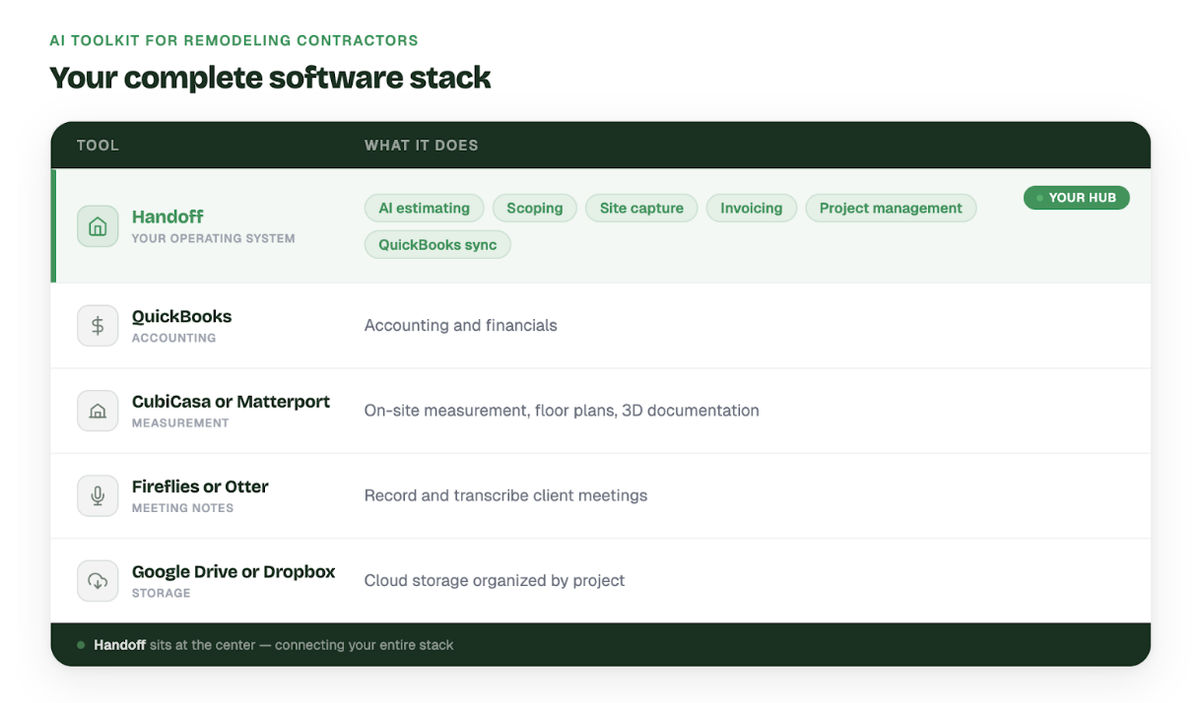
For most teams, Handoff and QuickBooks cover the basics. Other tools can come later as the business grows. If you are switching from another system, Handoff onboarding includes data migration so your project history and cost records come with you.
Frequently Asked Questions (FAQs)
How should residential contractors use AI without losing control of the job?
AI should help speed up estimating, documentation, and admin, but the contractor using it should still review the output before anything goes to a client or crew. The goal is to move faster with better organization, not to hand off final judgment.
Is Handoff pricing based on national averages or local rates?
Handoff surveys labor rates at the zip code level and pulls current material pricing through supplier partnerships, including Lowe’s and Home Depot. You can also set your own rates as presets so estimates reflect your actual numbers.
How do I keep AI focused and useful?
Use presets, templates, and clear project inputs. The more specific the information, the more helpful the output will be.
Can I bring my existing project history into Handoff?
Yes. Handoff onboarding includes data migration, so your past project files, cost records, and templates come with you.
Stop Leaving It to Memory
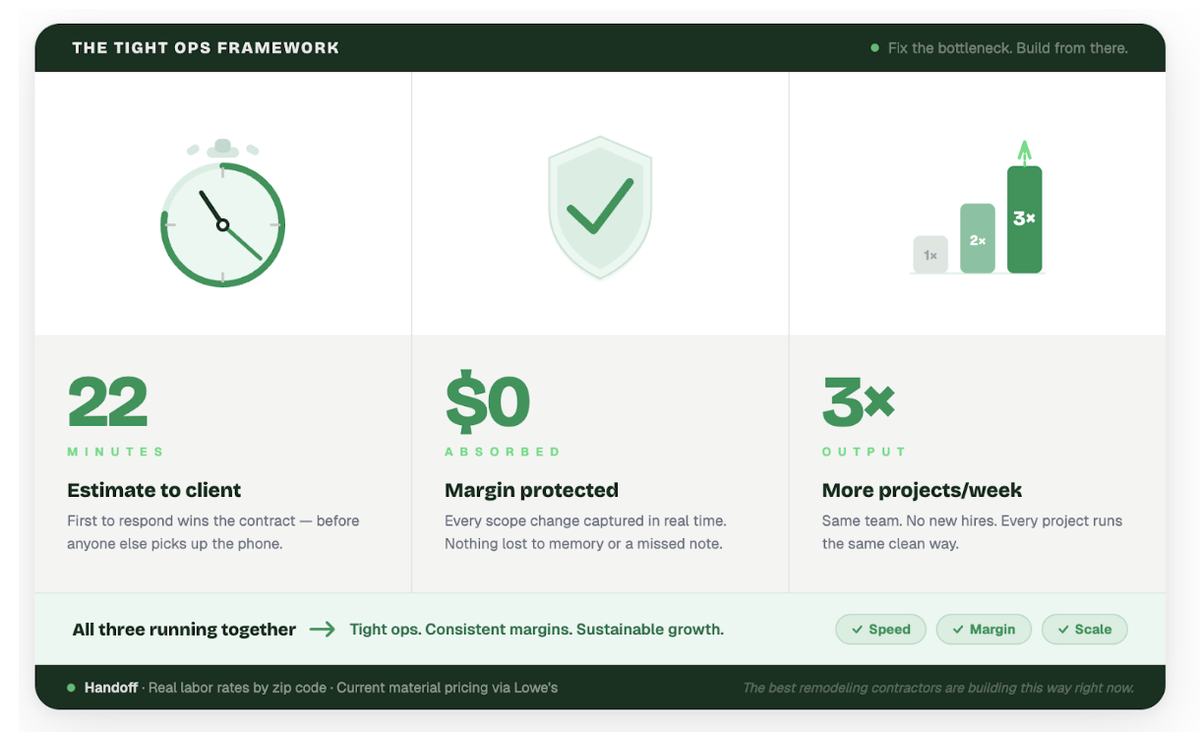
The residential contractors running the tightest businesses are not necessarily working harder. They are working with better visibility, faster workflows, and fewer things slipping through the cracks.
They win more projects because they move faster. They protect their profits because they keep the details connected. They grow with less chaos because they are not rebuilding every process from scratch on every project.
Start with the biggest bottleneck in the business right now, whether that’s slow estimates, a margin you cannot track clearly, or too much admin work. Fix that first, then build from there.
You can also watch our IBS workshop on YouTube for a live walkthrough on how remodeling contractors use AI to win more jobs and protect their margins,
Ready to fix the part of the business that's slowing you down most? Start your free Handoff trial today.