


What Is the Smartest Way to Start a Construction Business?
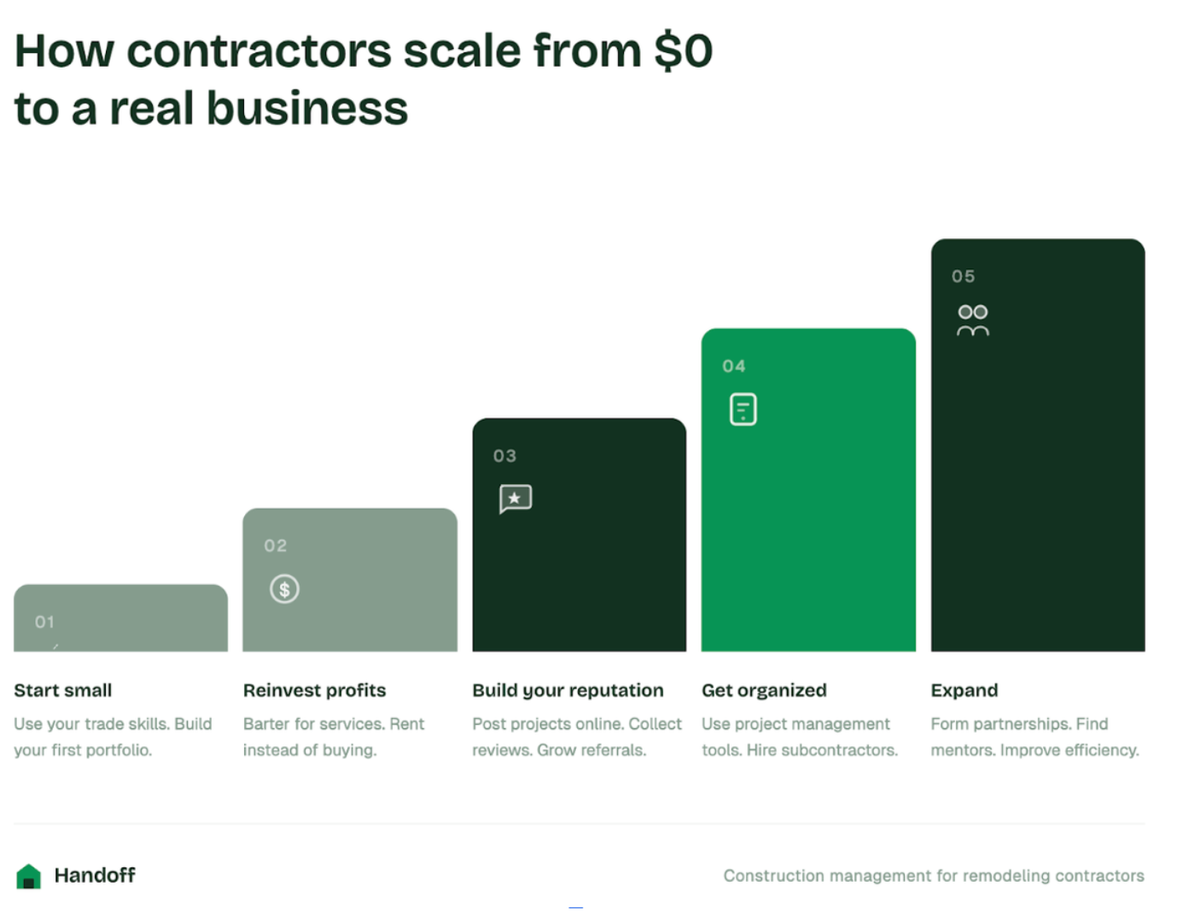
The smartest way to start a construction business is to begin small, minimize overhead, leverage your existing trade skills, and reinvest profits systematically before scaling. Most successful construction company owners started with limited capital and grew by prioritizing reputation, cash flow management, and strategic networking over expensive equipment and large teams.
This guide covers 17 proven, practical strategies for launching a construction company, even if you're starting with little to no money and no prior business experience.
Why Most Construction Businesses Fail (And How to Avoid It)
Before getting into the strategies, it's important to understand the landscape. The construction industry is one of the most competitive places for small business owners. Poor cash flow management, lack of a business plan, and underpricing are among the most common reasons new construction companies fail within their first few years.
The good news: these are all preventable problems. The strategies below address each of them directly.
Part 1: The Foundation: Getting the Basics Right Before You Break Ground On Your Construction Business
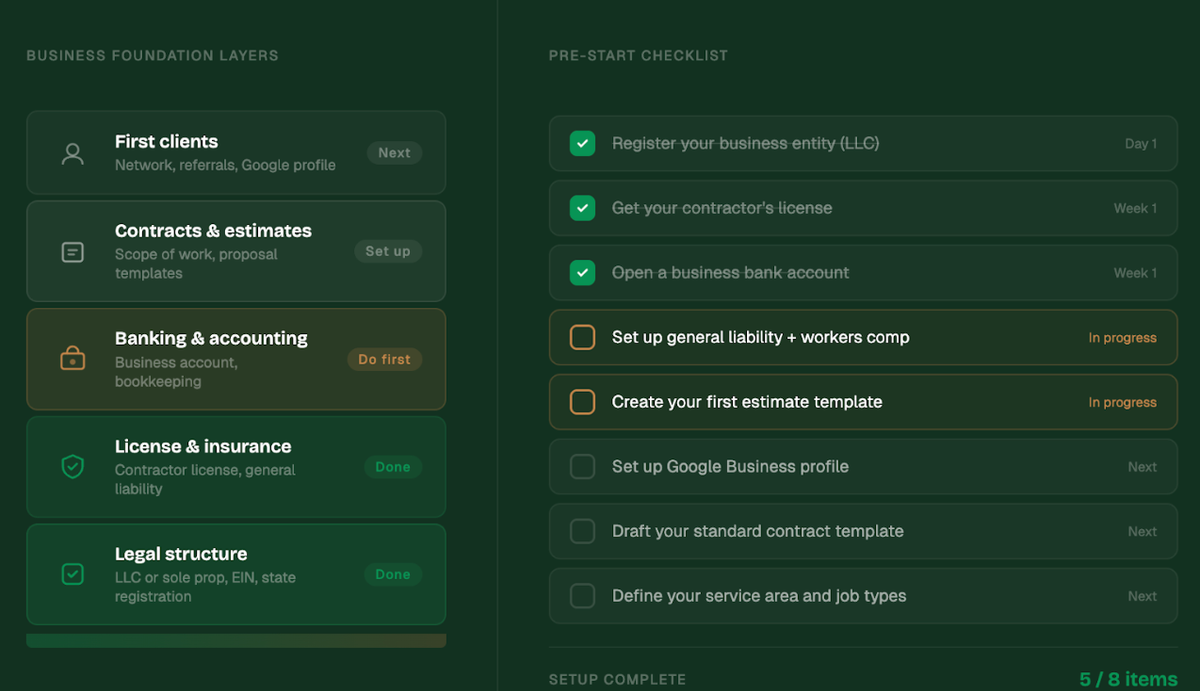
1. Start Small and Build Gradually
The most common mistake new contractors make is taking on projects that are too large, too complex, or too capital-intensive before they have the systems and reputation to support them. Starting small is not a sign of weakness; it is a sign of strategic thinking.
Begin by targeting smaller residential projects that require minimal upfront investment from you:
- Deck construction
- Bathroom renovations
- Stair repairs
- Landscaping work.
Each completed project builds three things simultaneously: your reputation, your experience, and your portfolio. These small wins compound over time, attracting progressively larger clients and more complex projects.
2. Leverage Your Existing Trade Skills
Identify your core areas of expertise, whether that's:
- Carpentry
- Drywall
- Painting
- Electrical
- Plumbing
- HVAC
Identify your core areas of expertise, whether that’s carpentry, drywall, painting, electrical, plumbing, or HVAC. Then, use those skills to handle as much of the work yourself as possible in the early stages. This helps reduce labor costs and lets you price competitively without sacrificing margin.
It's important to note that this is a temporary, startup-phase strategy. The long-term goal is to build a company that does not depend entirely on your personal labor. But in the beginning, your skills are your most valuable asset, and deploying them strategically is how you survive the early months.
3. Write a Business Plan (Even a Simple One)
A business plan is your roadmap. It doesn't need to be a formal, 50-page document, but it does need to answer the fundamental questions that will drive every decision you make.
Key Components of a Construction Business Plan:
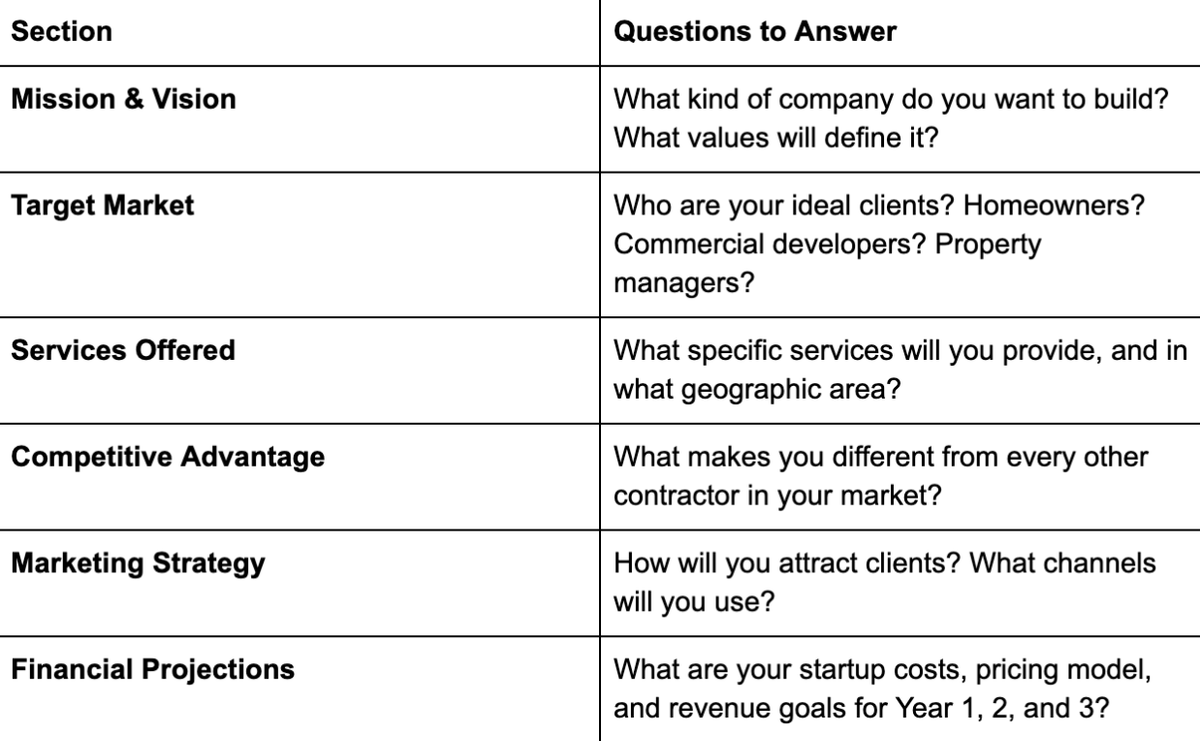
Answering these questions before you take on your first project will save you from making expensive, reactive decisions later. It also helps you assemble a modern contractor's toolkit that aligns with your goals.
Part 2: The Money: Smart Financial Strategies for Construction Business Startups
4. Reinvest Your Profits, Not Your Lifestyle
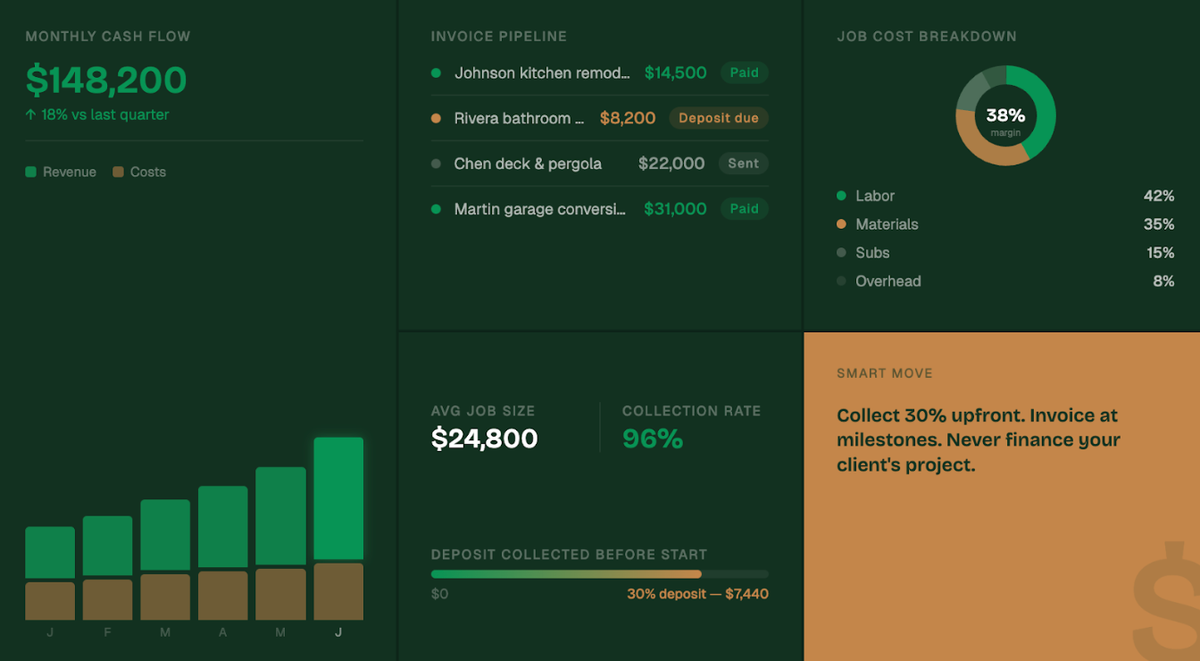
One of the most critical disciplines for any startup business owner is resisting the urge to spend early profits on personal rewards. In the beginning, every dollar you generate should be directed back into the business. Use your revenue to cover operational expenses, purchase necessary equipment, fund marketing, and invest in education.
The IRS does require that business owners take a reasonable salary, so pay yourself appropriately, but beyond that baseline, leave the money in the company. Reinvesting profits is the engine of sustainable growth.
5. Use Bartering to Acquire Services You Need
When cash is tight, creativity is your currency. Look for opportunities to trade your construction services for goods and services that your business needs. For example, you could complete a small renovation project at cost for a web designer in exchange for a professional website, or perform work for a real estate agent in exchange for referrals and positive reviews.
Bartering is an underutilized strategy that can help you acquire high-value assets and relationships without spending cash you don't have.
6. Rent and Lease Equipment Instead of Buying
Purchasing expensive construction equipment is one of the fastest ways to drain your startup capital. Instead of buying, rent or lease equipment on a per-project basis. This approach converts a large capital expenditure into a manageable, project-specific cost.
Bonus insight for general contractors: If you operate as a GC, you may not need to own any equipment at all. Your subcontractors bring their own tools and machinery to the job. Your role is to coordinate and manage…not to supply every piece of equipment on site.
7. Explore Business Loans and Lines of Credit Strategically
A business line of credit can be a valuable safety net when you're managing cash flow gaps; for example, when you need to pay subcontractors or purchase materials before a client payment arrives. However, this tool must be used with discipline.
Never extend yourself beyond what you are confident you can repay. Use a line of credit as a bridge, not a crutch. Pay it off as quickly as possible after each use, and treat it as a last resort rather than a first option.
8. Research Government Programs and Small Business Grants
Federal, state, and local governments offer a range of financial assistance programs for small businesses in the construction industry, including grants, low-interest loans, and minority or veteran-owned business programs. Research what is available in your area, review the eligibility criteria carefully, and apply for any programs for which you qualify.
9. Build Vendor Credit Relationships
Strong relationships with your material suppliers can provide a significant financial advantage. Many suppliers offer trade credit accounts with Net-30, Net-60, or even Net-90 payment terms. This means you can acquire the materials needed for a project, complete the work, collect payment from your client, and then pay your supplier, all without that money ever coming out of your own pocket.
The Vendor Credit Cycle:
Get Materials → Complete the Work → Collect Client Payment → Pay Supplier
Pay your accounts on time, every time, to protect your credit terms and maintain these relationships.
Part 3: The Work: Building a Reputation That Generates Business
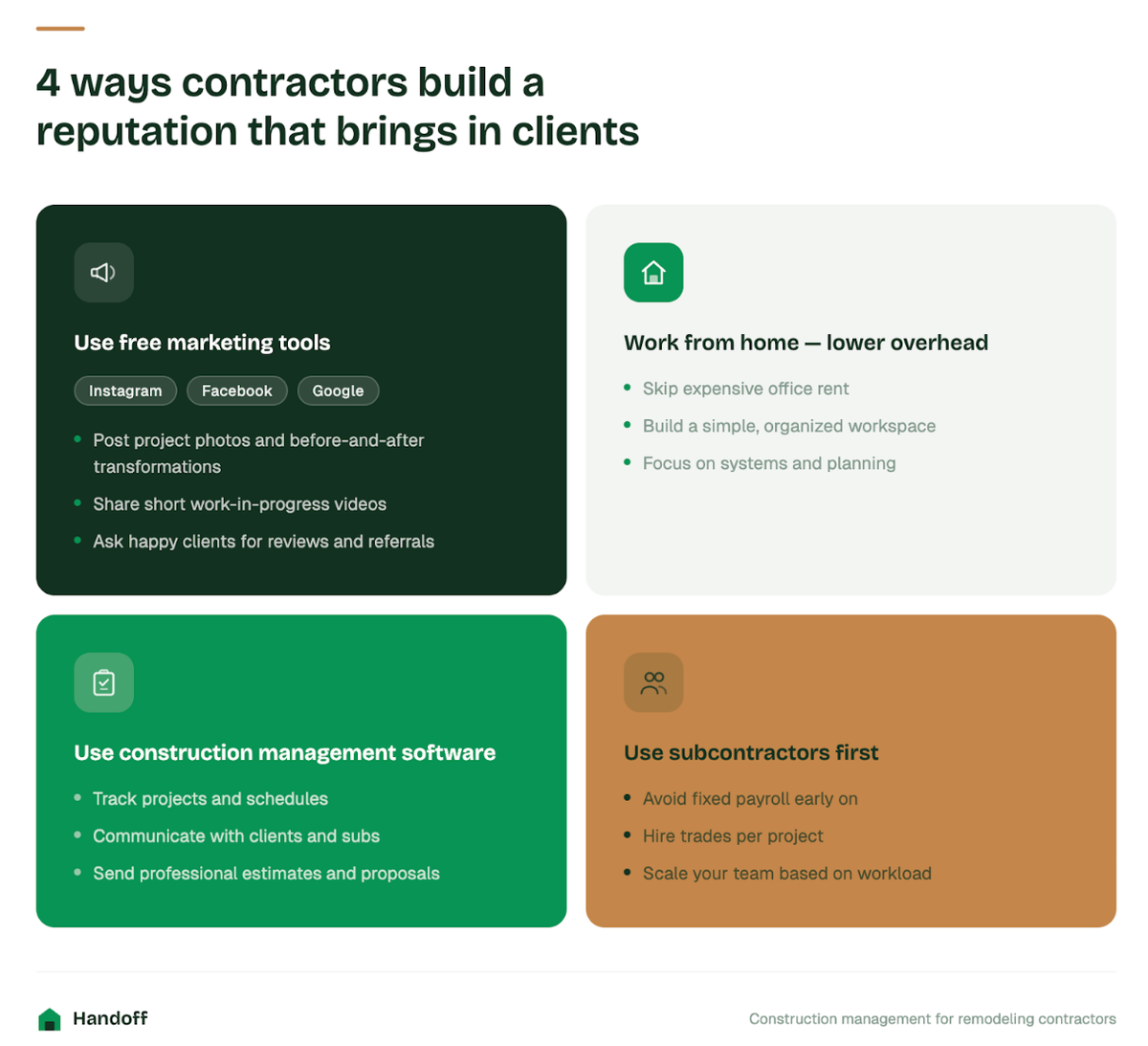
10. Utilize Free and Low-Cost Marketing Tools
You do not need a large marketing budget to build visibility for your construction business. The most powerful marketing tools available to you are largely free.
- Social Media: Create professional profiles on Instagram, Facebook, and LinkedIn. Post consistently: share project photos, before-and-after transformations, short videos of work in progress, and client testimonials. Consistency matters more than perfection.
- Search Engine Optimization (SEO): Optimize your website and Google Business Profile with relevant keywords so that clients in your area can find you when they search for contractors.
- Word-of-Mouth: Do exceptional work on every project. A satisfied client is your most powerful marketing asset. Ask for reviews, referrals, and testimonials.
11. Invest in Efficient Project Management Software
Operational efficiency is a competitive advantage. Project management software helps you track projects, communicate with clients and subcontractors, manage schedules, log daily progress, and monitor budgets, all in one place.
While basic tools like Google Sheets can get you started, modern construction management software is a significant competitive advantage. Platforms like Handoff AI go beyond simple project tracking, integrating AI-powered estimating and client-facing proposals to help you win more bids and protect your margins from day one.
12. Work from Home to Minimize Overhead
Renting office space is an unnecessary expense in the early stages of your business. Operate from a dedicated home workspace. Ensure your home office is equipped with a reliable computer, a fast internet connection, and organized filing systems — both physical and digital. A clean, organized workspace promotes focused, professional work.
13. Hire Subcontractors and Part-Time Employees Before Full-Time Staff
Hiring full-time employees creates a fixed payroll obligation that exists whether you have work or not. In the beginning, use subcontractors and part-time workers for specific projects. This approach gives you the flexibility to scale your workforce up or down based on project demand, without the burden of a large, permanent payroll.
Part 4: The Growth: Scaling Your Construction Company with Intention

14. Form Strategic Partnerships
Look for individuals or businesses whose skills and services complement yours, and propose collaboration on projects. For example, you could partner with an experienced general contractor who has the capital to fund projects while you source and develop the opportunities. Strategic partnerships allow you to take on larger, more complex work than you could handle independently.
15. Work as a Subcontractor to Build Experience and Income
If your ultimate goal is to run your own projects as a general contractor, consider working as a subcontractor in the interim. This generates consistent income while you build your client base, and it provides invaluable opportunities to learn from experienced contractors, gain industry insights, and demonstrate your capabilities to potential future clients.
16. Maximize Efficiency and Minimize Waste
Implementing lean construction practices: eliminating waste, streamlining processes, and identifying bottlenecks, directly improves your profitability. Two specific tactics worth adopting early:
- Use prefabricated components where possible to reduce on-site construction time and material waste.
- Deconstruct rather than demolish during renovation work. Salvaging reusable materials reduces your material costs and increases your net profit on each project.
Net profit is the goal. Every dollar saved through efficiency is a dollar added to your bottom line. Modern tools like Handoff's AI Site Walkthrough help contractors create detailed, accurate scopes of work directly from photos and notes, reducing errors and waste from the very beginning of a project.
17. Find a Mentor
This is perhaps the single most impactful investment you can make in your construction business. Find someone who has already built the kind of company you want to build — someone who has navigated the challenges you're facing and come out the other side successfully.
A great mentor provides:
- A proven framework and templates you can adapt for your own business.
- Guidance on crafting a business plan with clear, measurable goals.
- Insight into marketing strategy and growth planning.
- Accountability and encouragement when the journey gets difficult.
Mentorship can take many forms: a local business relationship, an online community, a formal coaching arrangement, or a mastermind group. Whatever form it takes, invest in it.
Frequently Asked Questions About Starting a Construction Business (FAQ)
How much money do you need to start a construction business?
The startup capital required depends heavily on your niche, business model, and location. By starting lean, like working from home, renting equipment, using subcontractors, and leveraging vendor credit, it is possible to launch a construction business with a relatively modest personal investment. The key is to minimize fixed overhead and convert as many costs as possible into variable, project-specific expenses.
What licenses are needed to start a construction business?
Licensing requirements vary by state and municipality. At a minimum, most contractors need a General Contractor License, a Business License, and General Liability Insurance. If you have employees, Workers' Compensation Insurance is also required. Research the specific requirements in your state before taking on any paid work.
What is the most profitable niche in the construction industry?
Profitability varies by market and location, but specialized services, such as kitchen and bathroom remodeling, custom home building, commercial tenant improvements, and sustainable construction, tend to command higher margins than general handyman services. Specialization allows you to charge a premium for expertise and operate more efficiently.
How do I find my first construction clients?
The process to find your first construction clients starts with your existing personal and professional network. Let everyone you know that you've started a business. Offer competitive pricing on your first few projects in exchange for testimonials and referrals. Claim your Google Business Profile and create social media profiles to establish an online presence. Word-of-mouth from satisfied early clients is the most powerful driver of new business.
Do I need a business plan to start a construction company?
While you are not legally required to have a business plan, it is strongly recommended. A business plan forces you to think through your strategy, identify potential challenges, and set measurable goals. It also becomes essential if you ever seek outside financing from a bank or investor.
Starting a Construction Business the Smart Way
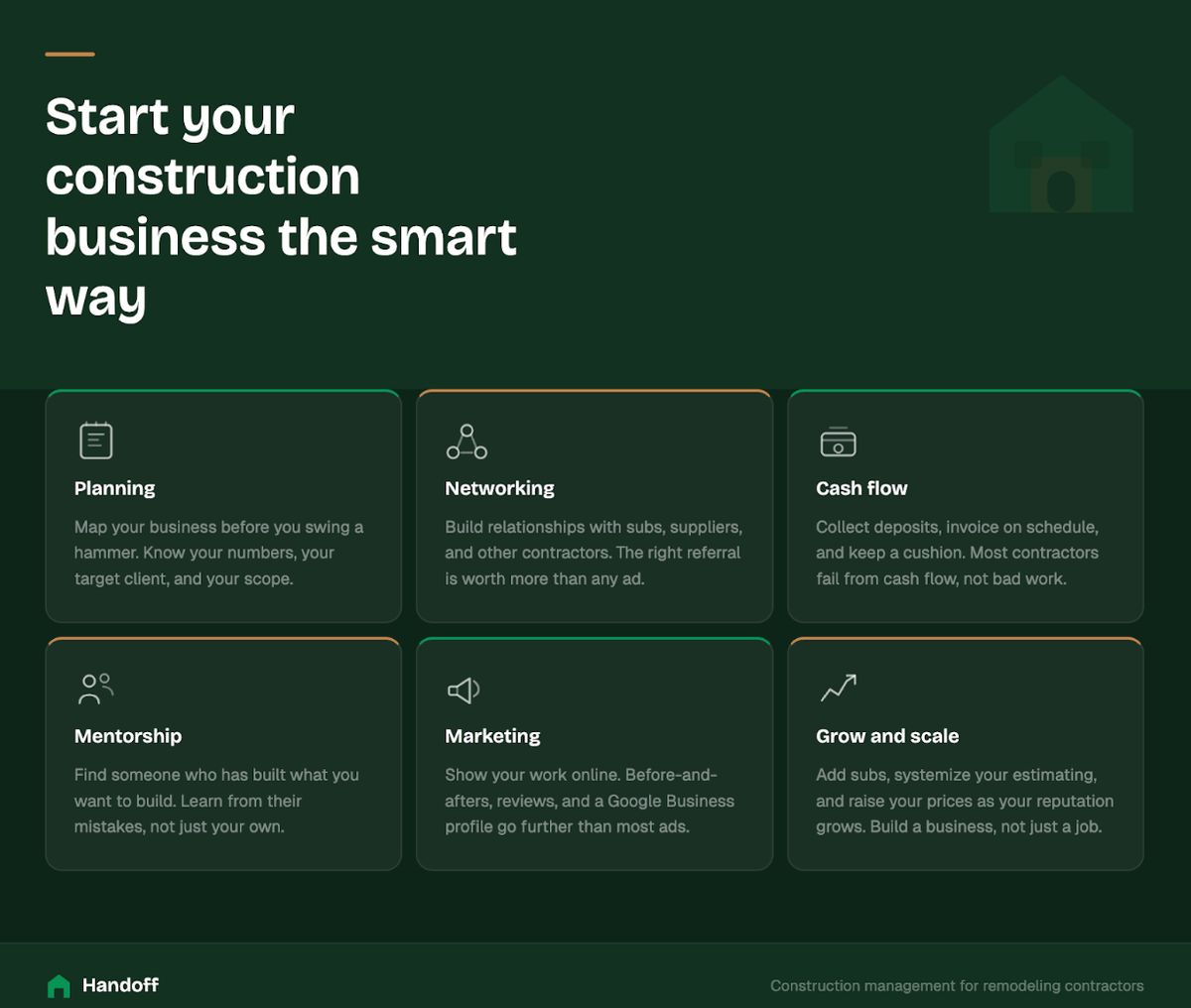
The key to success in the construction business is not how much money you have when you start. It is your determination, your creativity, and your ability to plan strategically and execute consistently.
Starting a construction company is a journey that demands perseverance, a growth mindset, and a willingness to learn from both successes and setbacks. By applying the 17 strategies outlined in this guide, from starting small and managing cash flow to building a network and finding a mentor, you can build a profitable, sustainable construction business that stands the test of time. When you're ready to implement these strategies with an end-to-end platform designed for residential contractors, get started with Handoff AI.


