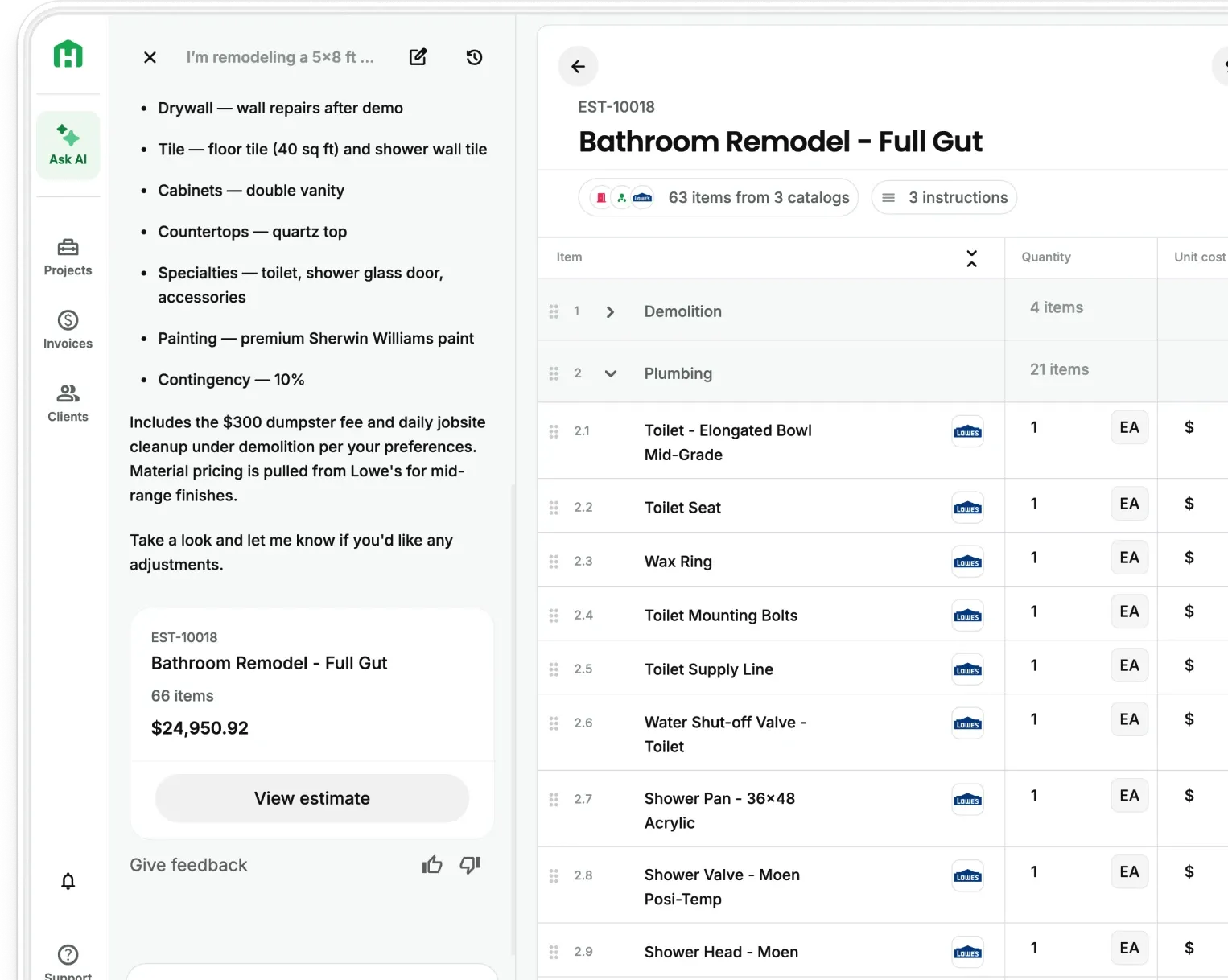
The Scaling Trap: Are You Building a Business or a Prison?
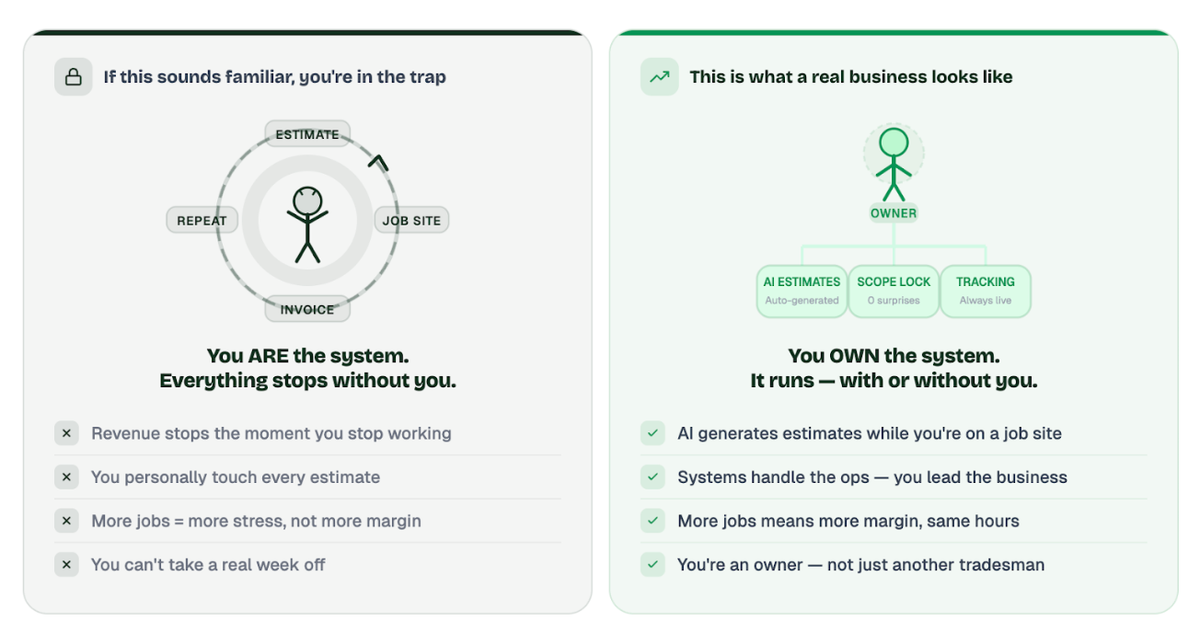
As a construction business owner, this probably sounds familiar: you’re the first one to the job site in the morning and the last one to leave at night. You’re the only one who knows how to price a complex job, the only one who can calm down an anxious client, and the only one who can fix a mistake on-site. Your revenue is growing, but so is the number of hours you work and the amount of stress you carry. This is the scaling trap. When your business’s growth is directly tied to your personal effort, you haven’t built a business, you’ve built a high-stress job that you can’t quit.
The core problem is that the informal systems that work for a small, owner-led operation begin to break under the pressure of growth.
Relying on memory, gut feelings, and ad-hoc processes leads to mistakes, lost profits, and, ultimately, owner burnout. But there is a better way.
The Modern Contractor model is a systematic approach that allows you to scale your business profitably and sustainably.
The Shift: From an Old Model to a Modern Reality
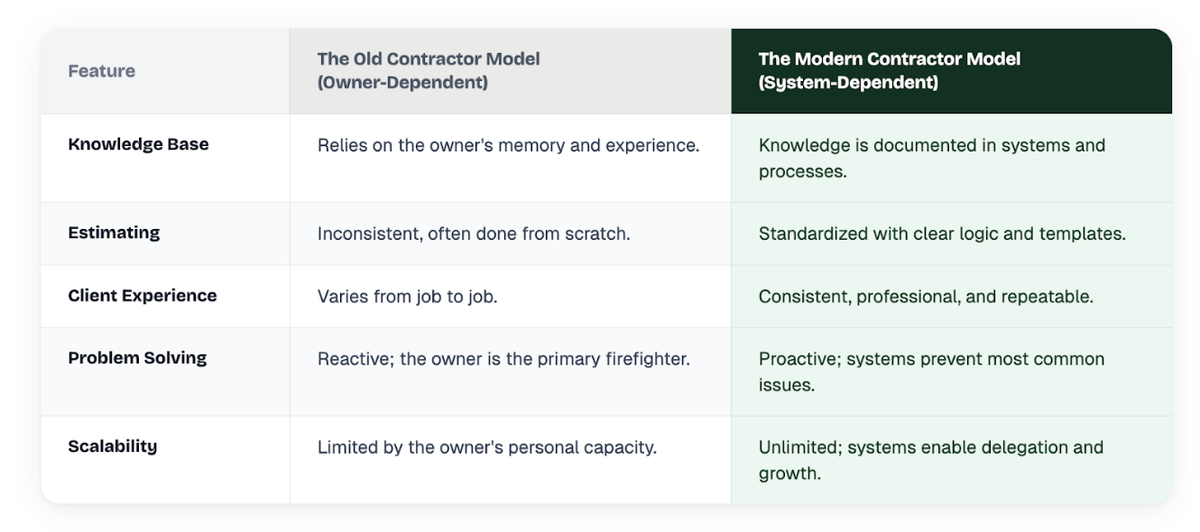
The construction industry is at a turning point. The old way of doing things is no longer competitive. The Modern Contractor understands that to scale effectively, the business must be able to run without them. This requires a fundamental shift in mindset and operations.
The 5 Pillars of a Scalable Construction Business
To transition from the old model to the new, you need to build your business on five non-negotiable pillars. These are the foundational construction business systems that enable sustainable growth.
Pillar 1: Clarity Over Guesswork
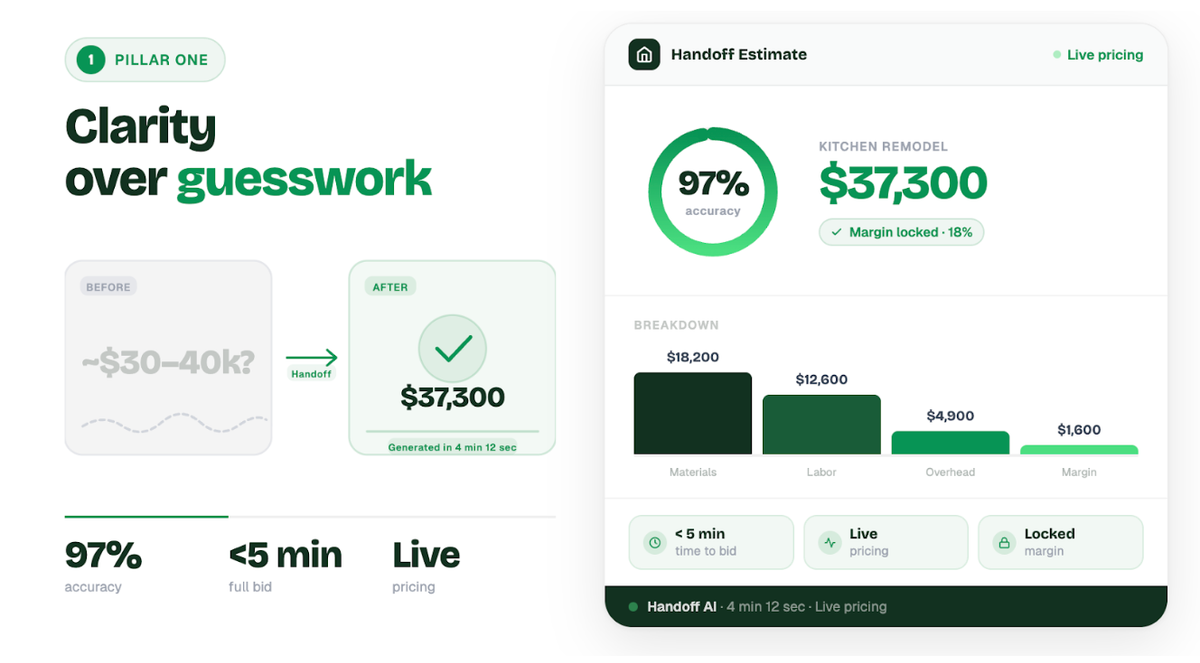
Guesswork is the enemy of profit.
The Modern Contractor eliminates it by standardizing the estimating and scope definition process. This means having a clear, documented logic for how you price jobs, what’s included, and what’s excluded.
Using construction estimating software can be a game-changer here, allowing you to create accurate, consistent estimates in a fraction of the time.
Example in Action: Instead of opening a blank spreadsheet for every new estimate, a Modern Contractor uses a templated system. This template includes pre-defined line items for common tasks, material cost libraries that are regularly updated, and standardized labor rates.
When a new lead comes in for a kitchen remodel, they aren’t starting from scratch. They’re starting from a “Kitchen Remodel Template” that already has 80% of the work done. They simply adjust quantities, add any custom elements, and the system calculates the total price. This ensures nothing is forgotten and the pricing is always consistent.
Pillar 2: Consistency Over Speed
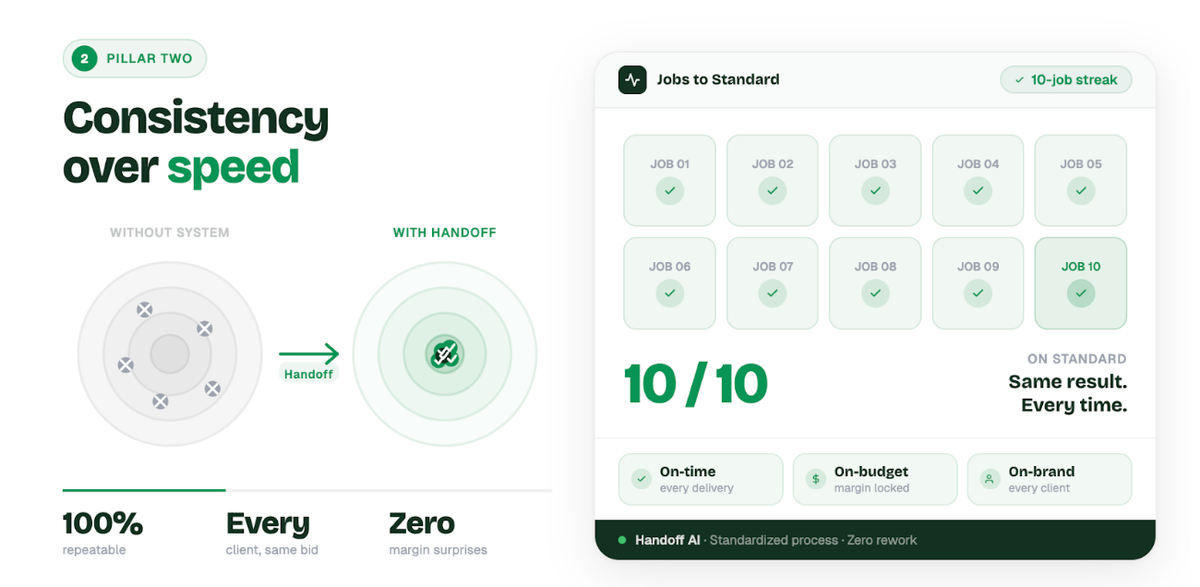
In the old model, speed is often prioritized, leading to rushed work and expensive mistakes.
The Modern Contractor prioritizes consistency. By creating repeatable processes for everything from client intake to final walkthrough, you build quality control into your workflow. This reduces errors, improves client satisfaction, and protects your margins.
Example in Action: A client calls to report an issue. In the old model, the owner fields the call, texts a project manager, and hopes it gets resolved.
In the Modern Contractor model, the client submits the issue through a dedicated portal. This automatically creates a ticket, assigns it to the right person, and tracks its resolution. The process is the same every time, for every client. The client feels heard, the issue is tracked so it can’t be forgotten, and the owner isn’t the central hub for every problem.
Pillar 3: Systems Over Memory
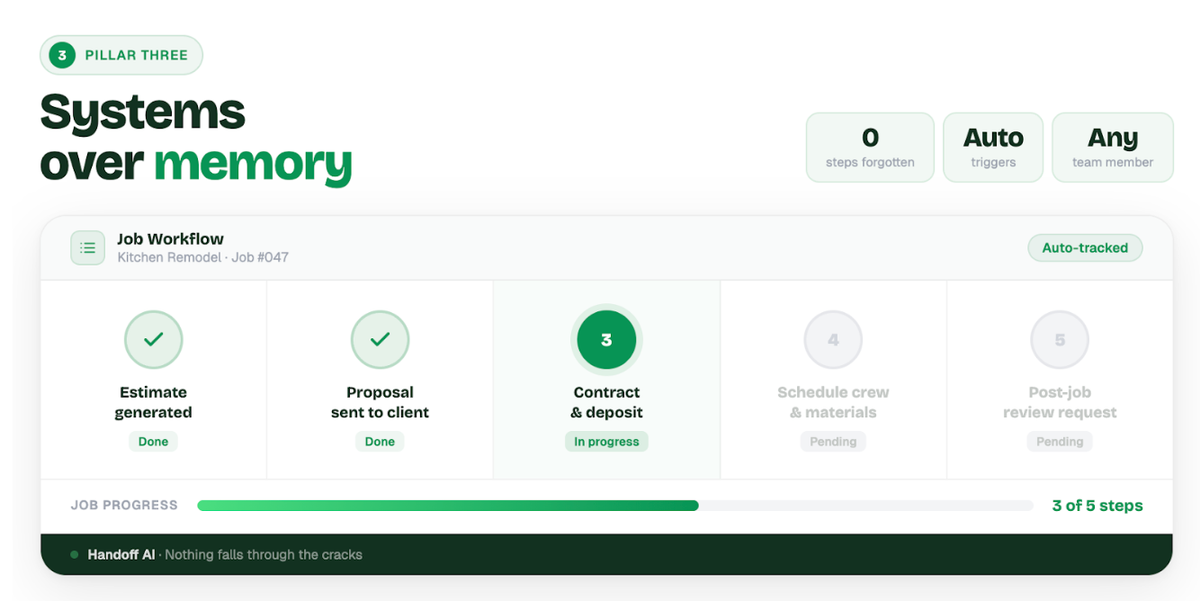
Your memory is not a scalable business asset.
The Modern Contractor documents all critical knowledge, turning individual experience into a company-wide resource. When your processes are documented, you can delegate tasks with confidence, onboard new team members faster, and ensure that every job is done the right way, every time.
Example in Action: A new project manager is hired. In the old model, they shadow the owner for weeks, trying to absorb two decades of experience through osmosis.
In the Modern Contractor model, they are given access to the company’s online portal, which includes a “Project Handoff Checklist,” a “Change Order Process” guide, and a library of “Standard Operating Procedures” for common tasks. They can become a productive member of the team in days, not months, because the company’s knowledge is at their fingertips.
Pillar 4: Control Over Chaos
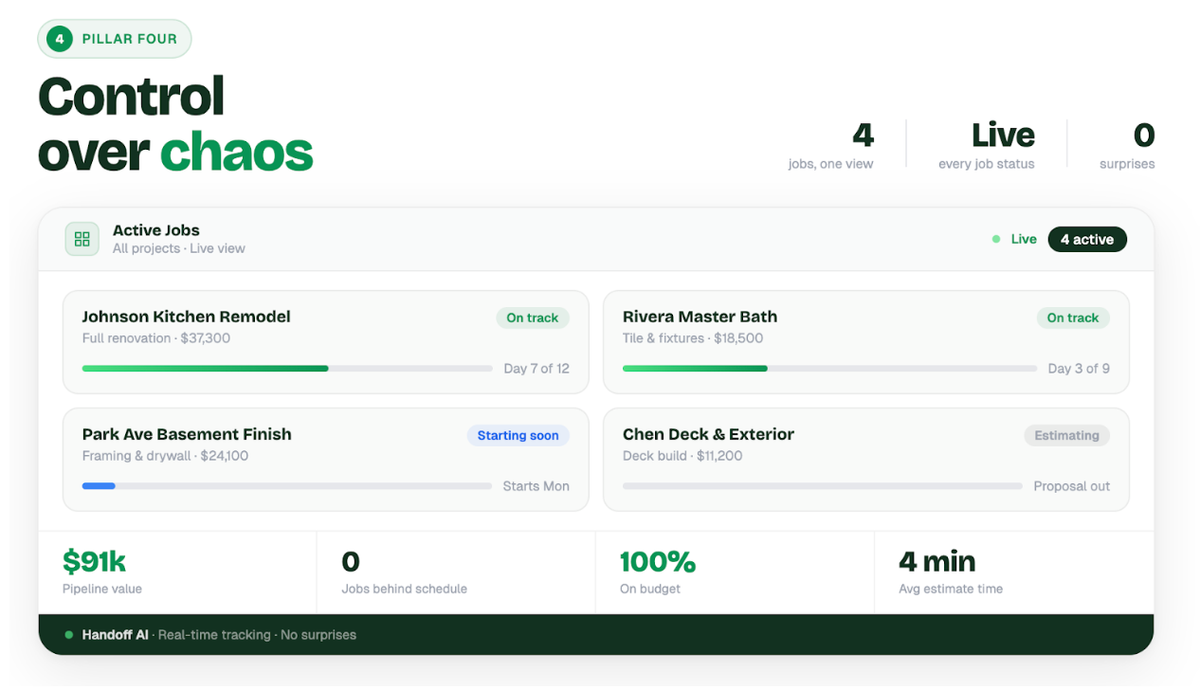
The old model is defined by reactive firefighting.
The Modern Contractor model gives you control through proactive construction project management. By having clear systems for communication, scheduling, and change orders, you can anticipate problems before they happen and run a calmer, more predictable operation.
Example in Action: A client wants to change the tile in a bathroom mid-project. In the old model, this is a verbal agreement that leads to confusion about the cost and schedule.
In the Modern Contractor model, the project manager creates a formal change order in their software. The system automatically calculates the new cost and schedule impact. The client approves it with a digital signature, and the new scope is instantly communicated to the field team. There is no ambiguity, no dispute over cost, and a clear paper trail.
Pillar 5: Scalability Without Sacrifice
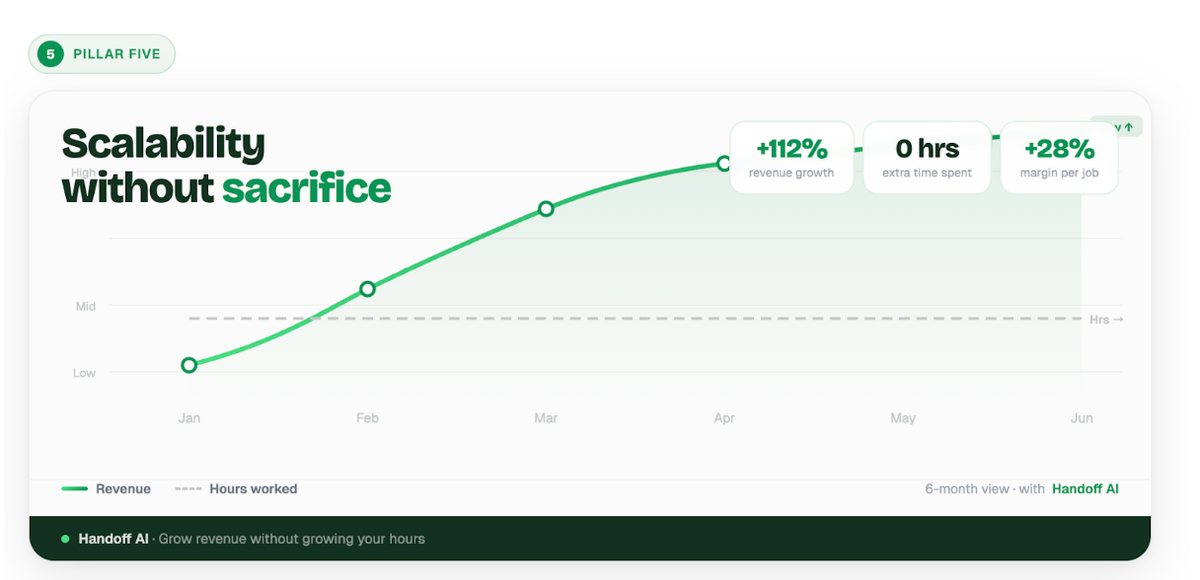
This is the ultimate goal. When you have clarity, consistency, systems, and control, you achieve true scalability. You can take on more work without sacrificing quality, profitability, or your own well-being. You can finally build a business that provides you with freedom, not a prison of your own making.
Example in Action: An owner wants to take their first two-week vacation in ten years. In the old model, this is impossible. The business would grind to a halt.
In the Modern Contractor model, it’s a non-event. The estimating process is handled by the sales team using the company’s software. Project issues are managed by the PMs through the established workflows. The owner can check in on a dashboard from their phone for 15 minutes a day, but they are no longer the central processing unit for the entire operation.
4 Common Traps That Keep Contractors Stuck
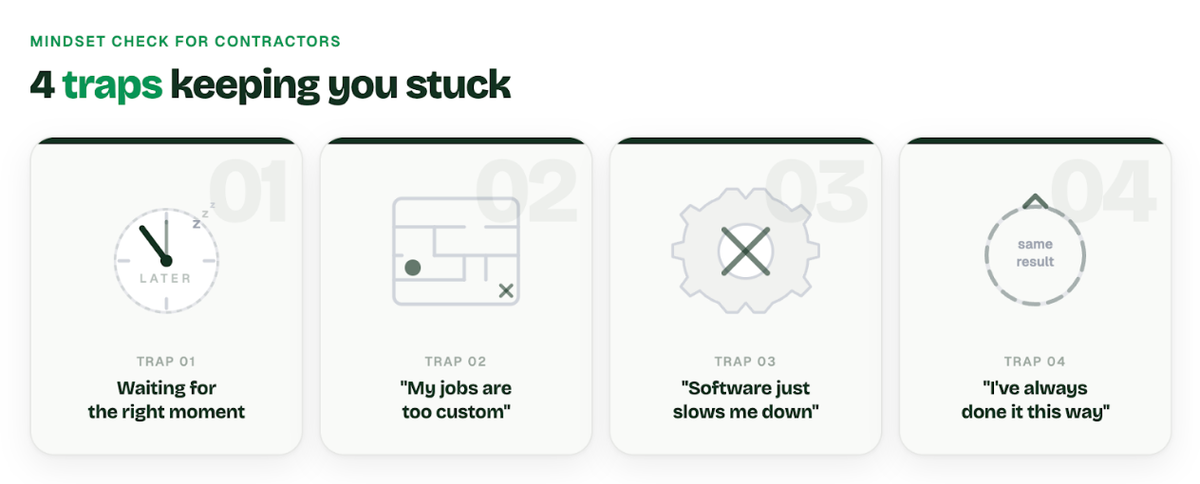
Transitioning to the Modern Contractor model requires overcoming common mental blocks. Here are four traps to avoid:
- "I'll systemize when things slow down." They never do. The chaos only scales with the revenue. You have to build the systems while you’re busy.
- "My jobs are too custom for systems." This is a myth. Structure doesn’t prevent customization; it enables it. Solid systems handle the 80% of work that is repeatable, freeing you up to focus on the 20% that is truly custom.
- "Software just slows me down." Bad software does. The right software, built for the way contractors actually work, makes you faster, more accurate, and more profitable.
- "I've always done it this way." The old way is what leads to burnout. Embracing a new way is essential for survival and growth.
Real-World Proof: The Modern Contractor Model in Action
These pillars aren’t just theory. Here’s how real contractors are using this model to transform their businesses:
Lasting Impressions: From Forgotten Scope to Protected Profits
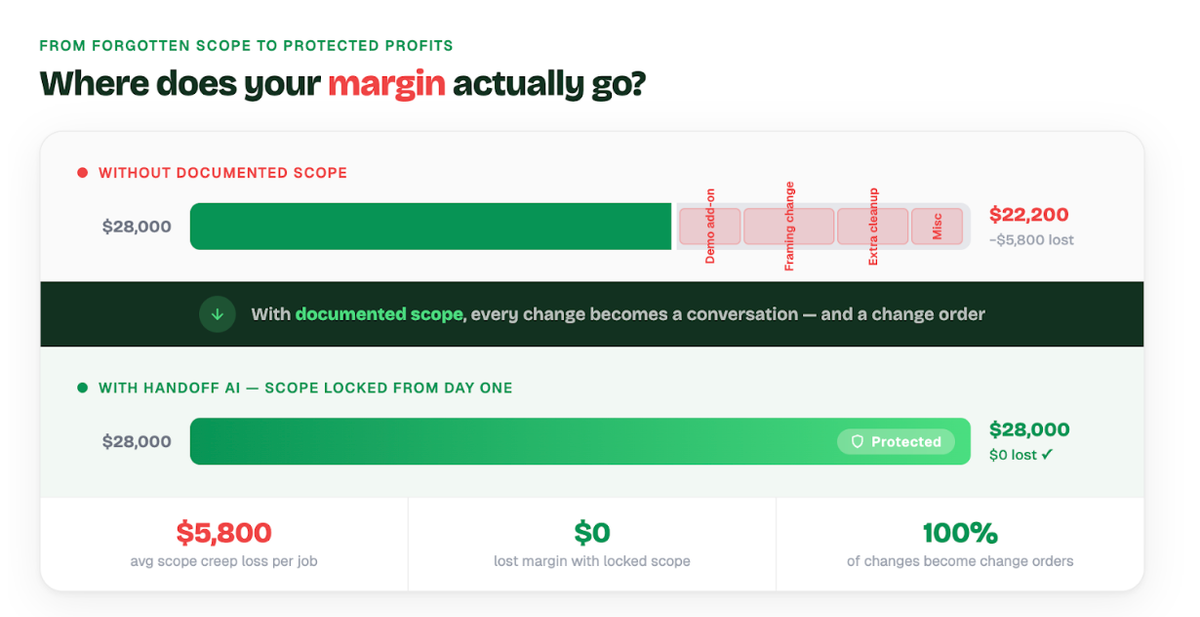
Matthew Dodge of Lasting Impressions was running his business from memory. On one job, that meant he completely forgot to include an entire bathroom in the estimate, a $2,500 mistake. After implementing a system-driven approach with Handoff, he was able to use photo-based estimating to ensure every part of the job was captured.
On a subsequent project, the system helped him catch a similar missed scope item before the proposal ever went out. As Matthew says, “That alone paid for the subscription several times over.” This is a perfect example of Systems Over Memory.
Keeler Construction Group: From Hours to Minutes
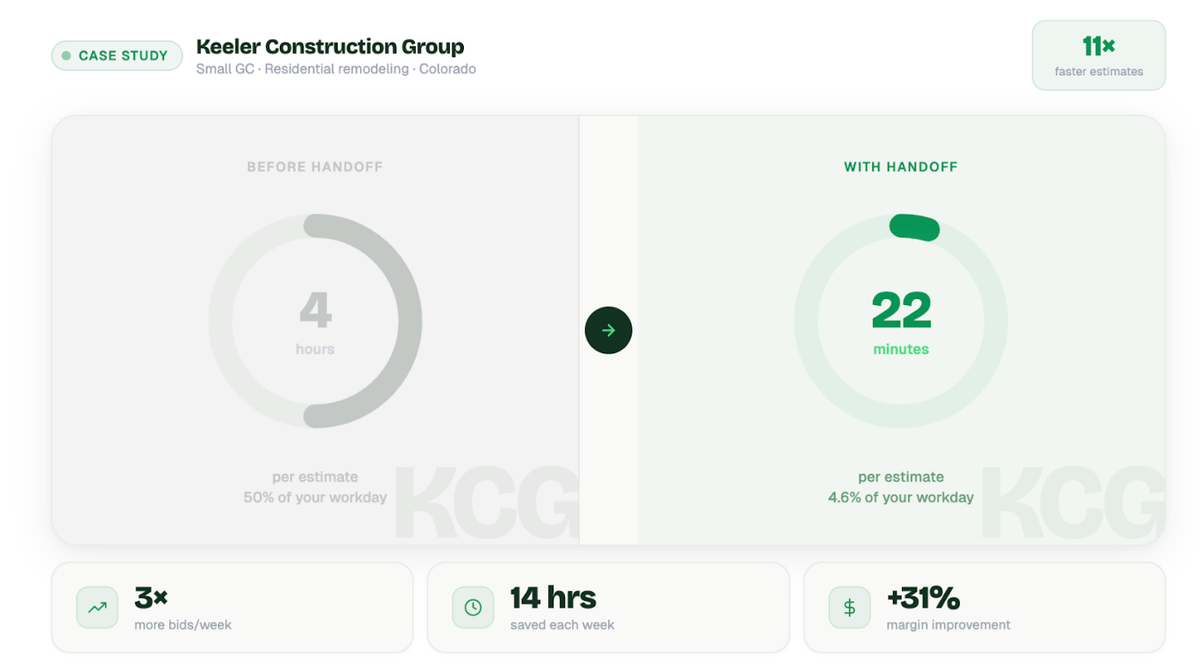
Tim O’Keefe of Keeler Construction Group was spending 2-4 hours on every estimate, which limited how many leads he could respond to. By adopting a templated, system-driven estimating process, he cut that time down to just 20 minutes, a 75% reduction.
This allowed him to triple his productivity, going from creating 4 proposals in a day to 12. He could send professional, accurate proposals to clients before even pulling away from the job site. This is Consistency Over Speed in action.
Atelier 7: From Guesswork to Financial Clarity
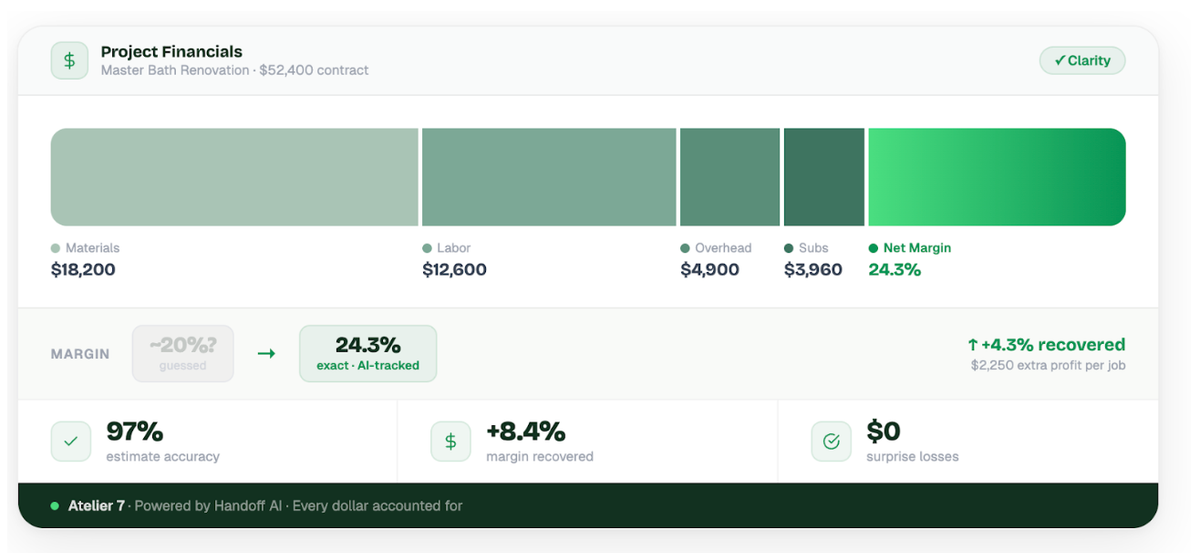
For high-end builders like Atelier 7, accuracy is everything. Their complex projects meant estimates could take weeks to compile, and they still faced uncertainty about their numbers. By implementing a modern, system-driven approach, they were able to generate highly detailed estimates in a matter of hours.
More importantly, their estimates are now consistently within 5-10% of actual project costs. This gives them the financial clarity to scale with confidence. As co-founder Anthony Pope puts it, “I want to depend on it. I want to know that this number is real.” This is the power of Clarity Over Guesswork.
Your First Steps to Becoming a Modern Contractor
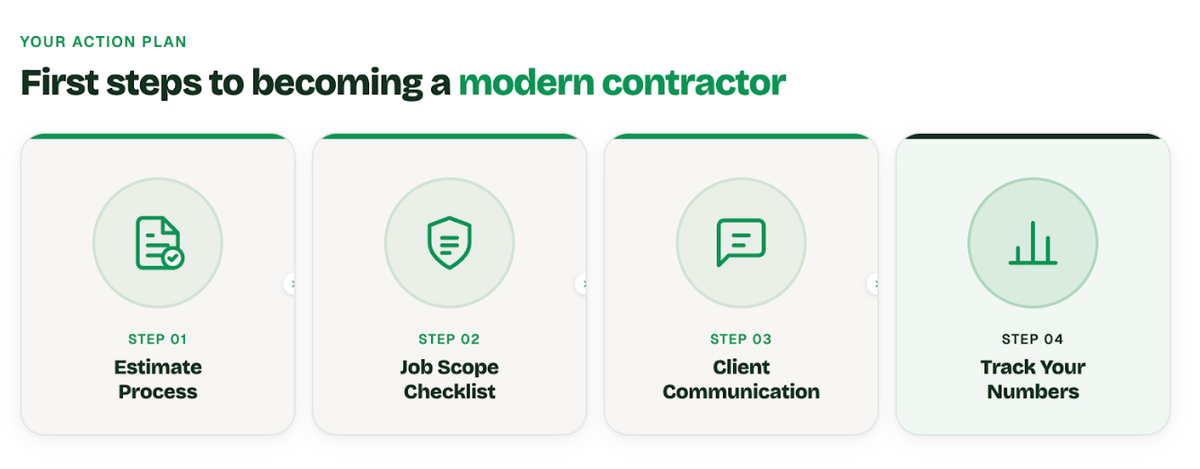
You don’t have to change everything overnight. Start with small, manageable wins:
- Document one core process: Write down the exact steps you take to create an estimate.
- Create one checklist: Build a simple scope checklist for your most common type of job.
- Fix one communication bottleneck: Identify the question you answer most often and create a template or system to address it proactively.
Conclusion: Stop Being the Bottleneck, Start Building a Legacy
Systemization isn't about adding bureaucracy or stifling your craft. It's about creating the freedom to do your best work. It's about building a durable, profitable business that can thrive with or without your constant intervention. Stop being the bottleneck and start building a legacy.
Ready to Dive Deeper?
Register for our free webinar, The Modern Contractor, to learn how to implement these 5 pillars in your business and build a construction company that works for you.
Frequently Asked Questions (FAQ)
What is the scaling trap in a construction business?
The scaling trap happens when your business grows, but everything still depends on you. Revenue goes up, but so do your hours, stress, and decisions. Instead of building a company, you build a job you can’t step away from.
Why do construction business owners become the bottleneck?
Because too much of the business lives in the owner’s head. Pricing, client communication, job decisions, and problem-solving all depend on one person. That works for a while, but it breaks as the business grows.
How do I stop being the bottleneck in my construction company?
You stop being the bottleneck by turning repeatable work into repeatable processes. That means documenting how you estimate, defining scopes clearly, and creating clear workflows for communication, handoffs, and change orders. Once the process is clear, your team can execute without waiting on you.
What systems does a construction business need to scale?
A scalable construction business needs a consistent estimating process, clear scope templates, a change order workflow, and a reliable way to manage client communication and project updates. These are what help the business run smoothly as volume increases.
Can construction estimating software actually help contractors scale?
Yes. Construction estimating software helps contractors create estimates faster, reduce missed scope items, and keep pricing more consistent across jobs. That saves time, protects margins, and makes it easier to delegate work without losing control.
How do I scale my construction business without burning out?
You scale without burning out by building the business so it doesn’t rely on your memory or constant involvement. The goal is to create enough clarity and consistency that more work doesn’t automatically mean more chaos. That’s what turns growth into something sustainable instead of exhausting.
Ready to win more jobs with less manual work? Try Handoff free →